

Long before the red dress, feathers and songs became part of Saint Paul Winter Carnival tradition, Klondike Kate was a real woman named Kathleen Eloisa Rockwell.
Born in Junction City, Kansas, in 1876, Kathleen was a singer, dancer, adventurer and businesswoman who made her name in Dawson City during the final years of the Klondike Gold Rush. Onstage, she dazzled crowds with elaborate costumes and a signature Flame Dance. Offstage, she was remembered for her warmth, generosity, quick wit and remarkable ability to make people feel seen.
There were many entertainers in Dawson, some with greater technical talent. Yet it was Kate whom the miners remembered as the “Queen of the Yukon.” Her story is a mixture of documented history, colorful personal recollections and the legend she helped build during her own lifetime. Together, they reveal a woman who was bold, complicated and far ahead of her time.
Early Life and Stage Dreams
Kathleen, often called Kitty, spent much of her childhood in Spokane, Washington. Her mother, Martha, hoped to raise a proper young lady, but Kitty had little patience for convention. She would rather fish along the river, race horses through the countryside or turn an ordinary afternoon into an adventure.
Her mother tried private schools and convents, hoping they might teach her refinement and restraint. Kitty resisted nearly every attempt. She was bright and quick to learn, but rules bored her. Music did not. From childhood, a piano, a song or even music drifting from a saloon could set her feet in motion. She danced through the house, across the yard and on her way to school, imagining herself performing on the great stages of New York.
That dream stayed with her. As a young woman, she pursued work in vaudeville and variety shows, despite her mother’s objections and the uncertainty of life on the road. The stage was not something Kathleen stumbled into. It was where she had always imagined she belonged.
Journey to the Klondike
By the turn of the century, news of the Klondike had captured the country’s imagination. Dawson City promised gold, excitement and audiences hungry for entertainment. For an ambitious young performer, it was difficult to resist.
Kate later recalled being denied passage through Miles Canyon and the White Horse Rapids because women were considered too fragile for the dangerous journey. Unwilling to be turned back, she disguised herself in a flannel shirt, overalls and fur cap and slipped aboard a departing scow.

Some details of Kate’s journey changed as she retold the story over the years, but its spirit remained consistent: when she was told she could not go, she found another way. It was an early glimpse of the determination and disregard for convention that would help make her famous in Dawson.
Life in Dawson City


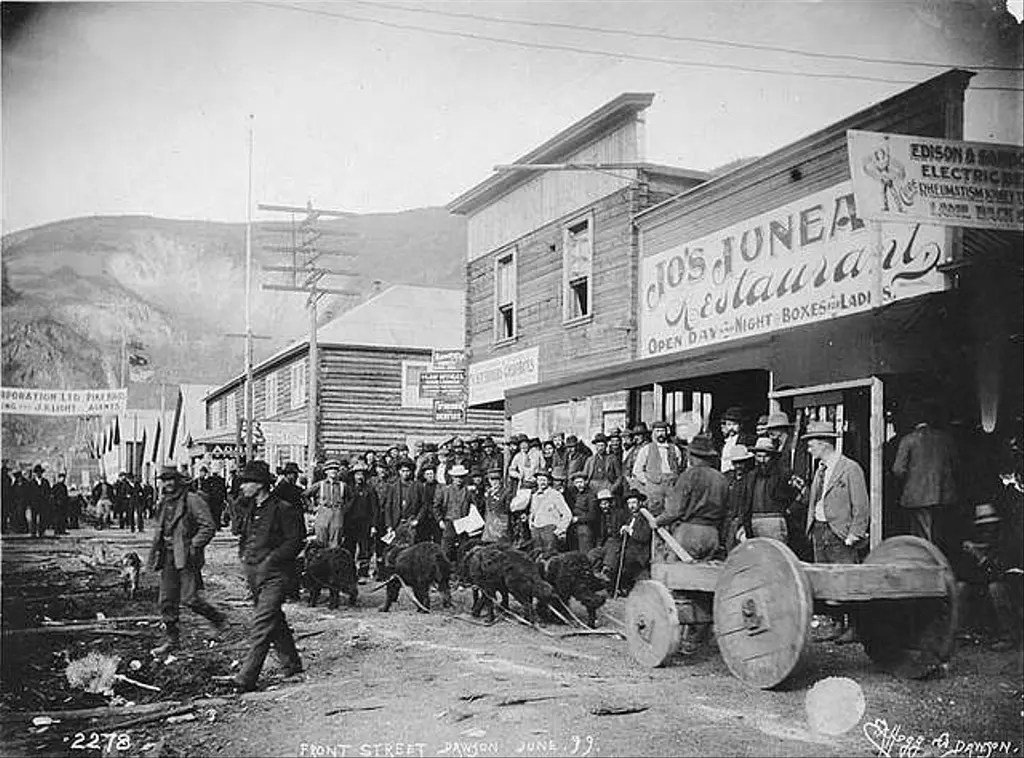

When Kate arrived in Dawson, Front Street was alive with saloons, gambling halls, theaters, music and men newly arrived from the goldfields. She joined the company at the Savoy and quickly found her place in the center of it all.

Her signature Flame Dance made her a sensation. Dressed in pink tights and surrounded by flowing red chiffon, she spun across the stage to create the illusion of fire. At one memorable Christmas performance, she returned to the stage in a glittering white gown wearing a tin crown fitted with lighted candles. The miners cheered and called her the Queen of the Yukon. The hot wax left such a mess in her hair that she had it cut short, giving her another distinctive look.
Kate’s fame brought extraordinary earning power. Her base pay rose, and she could earn hundreds more dancing with patrons, encouraging champagne sales and keeping lonely miners company through the long northern nights. But life in Dawson required much more than looking beautiful onstage. Performers rehearsed, wrote material, created costumes and worked through the night. Kate loved it. She had finally found a place as energetic, theatrical and unpredictable as she was.
Becoming the Queen of the Yukon
Kate was not the only beautiful woman in Dawson, nor was she necessarily its most polished singer or dancer. What set her apart was the complete force of her personality.
She could be glamorous and outrageous, but she was also approachable, funny and genuinely interested in people. She remembered names. She welcomed newcomers. She moved easily between wealthy businessmen, working miners and people who had fallen on hard times. In a remote place filled with loneliness and hardship, Kate made a room feel warmer.
One story captures that difference. Kate noticed a young man spending heavily and drinking as though he no longer cared what happened to him. Instead of continuing to profit from his despair, she befriended him. When she learned he was interested in botany, she encouraged him to explore the hills and bring her wildflower specimens. He gradually stopped drinking, later married and named his first child Kathleen. He remained in contact with Kate throughout her life.
Years later, while helping run a Dawson theater, Kate continued to look after patrons who had lost control of themselves. She sometimes held their gold for safekeeping or quietly slowed them down before they spent everything. She wanted people to return after a night at her establishment still feeling that she had treated them fairly.
That was the quality behind the title “Queen of the Yukon.” Kate offered more than entertainment. She gave people a sense of belonging.
Kate and Alexander Pantages

Kate’s relationship with Alexander Pantages is often reduced to the familiar story of “a man who done her wrong.” He did hurt her deeply, but their years together also reveal how ambitious and business-minded she was.
Pantages was working in Dawson’s entertainment district when he and Kate became partners in business as well as in life. When an opportunity arose to open a theater, he brought the idea to Kate. She supplied the money, and together they opened the Orpheum. Pantages understood how to build a fast-moving show, while Kate served as hostess, headline performer and a steady hand in running the room. The Orpheum became one of Dawson’s leading attractions.
Kate understood both performance and profit. She knew how to draw a crowd, how to manage entertainers and how far she could push a patron without losing his goodwill. When she and Pantages later left the Yukon, she continued spotting opportunities. In Victoria, she bought a small theater that combined early motion pictures with live vaudeville acts. It was a shrewd idea that anticipated the direction popular entertainment was beginning to take.
While Kate toured, she sent earnings back to Pantages for what she believed were their shared theatrical ventures. In 1905, she learned that he had married violinist Lois Mendenhall. Kate believed that her labor and money had helped lay the foundation for his growing theater business, only for him to cast her aside. She filed a $25,000 breach-of-promise suit. The case ended without the vindication she wanted, and Kate later said she received less than $5,000 in settlement.
The betrayal became part of her legend, but it should not define her. Kate was not merely the woman behind a successful man. She was a partner, investor, performer and businesswoman whose money, instincts and labor helped make their early success possible.
She also kept helping people. She encouraged young performers, advocated for people who needed another chance, helped arrange homes for children and cared for old sourdoughs whose searches for fortune had come to little. From the end of World War II until her death, she appeared in parades, pageants, festivals and pioneer celebrations, still delighting audiences with stories of the North.
Later Life and Lasting Fame

Kate never again found the same combination of fame, fortune and excitement she had known in Dawson. She continued performing, traveled widely and eventually made her home in Oregon. As she grew older, she remained fiercely proud of her years as a dance-hall entertainer and became a living link to the Klondike era.
Kathleen Rockwell died in her sleep on February 21, 1957, at the age of 80. By then, she had lived long enough to see herself become a legend. She never amassed the fortune that passed through her hands, but she achieved another kind of permanence. Decades after Dawson’s brightest nights had faded, people still remembered how Klondike Kate had made them feel.
Kathleen Rockwell’s Legacy
Today’s Klondike Kate tradition is inspired by more than Kathleen Rockwell’s appearance and performances. It celebrates the showmanship, independence, generosity and genuine connection with people that made her unforgettable.
Kathleen became the Queen of the Yukon because she brought light and excitement to a place shaped by hardship, isolation and uncertainty. More than a century later, her story remains at the heart of the tradition—not as a standard every Kate must perfectly embody, but as the spirit the organization continues to celebrate and carry forward.


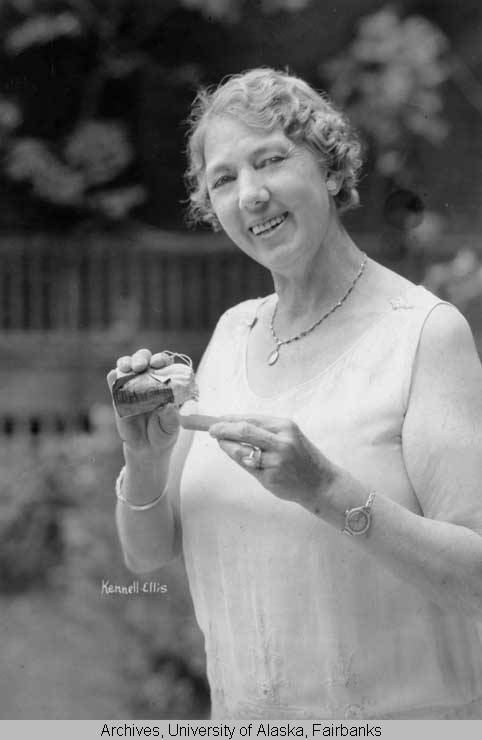

Historical note: This account is based primarily on Klondike Kate: The Life & Legend of Kitty Rockwell, The Queen of the Yukon by Ellis Lucia. The book draws from public records, contemporary newspaper coverage, interviews with people who knew Kate and stories Kate told about her own life. Where the historical record is uncertain, the wording reflects that distinction.